Brief Introduction
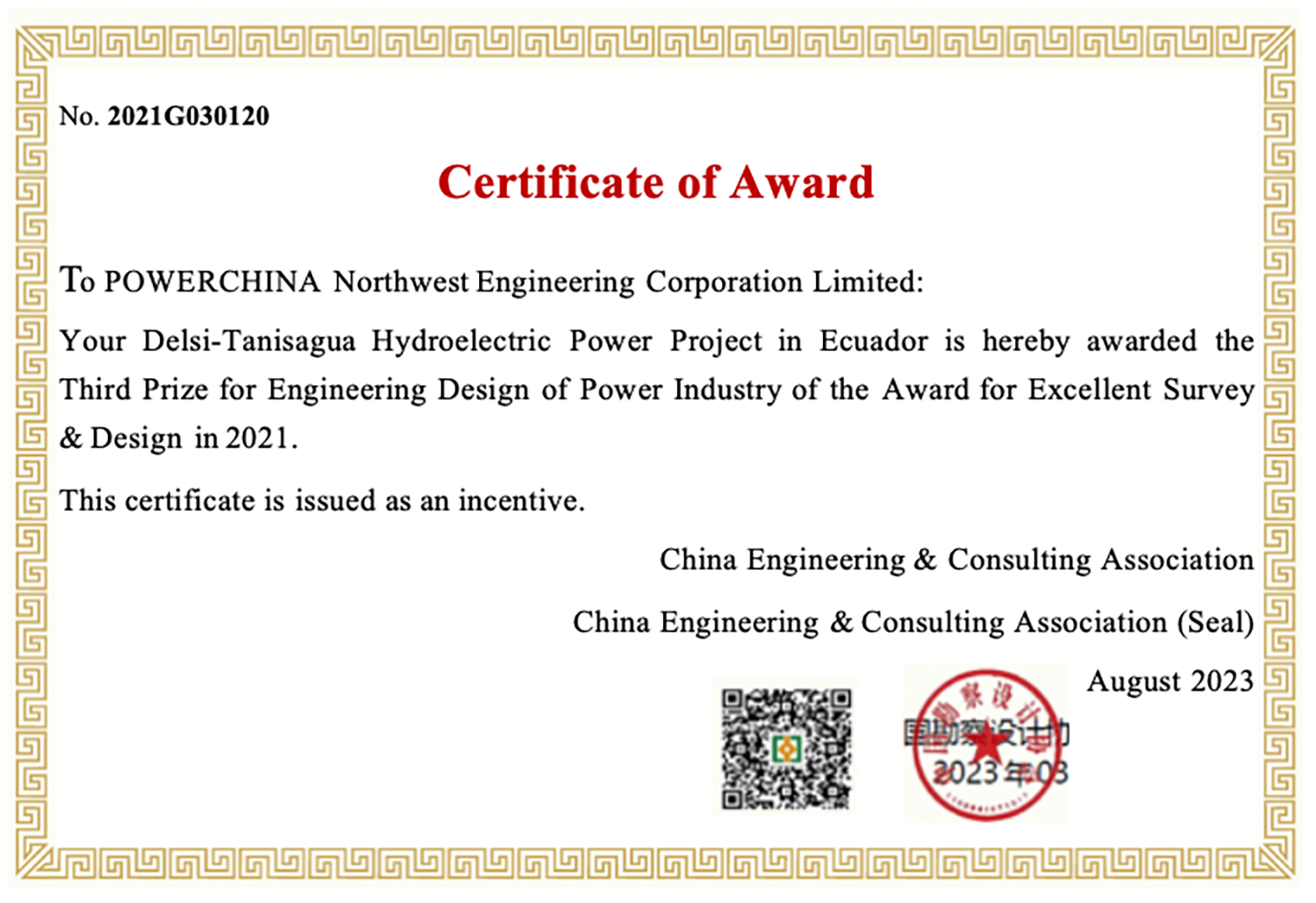
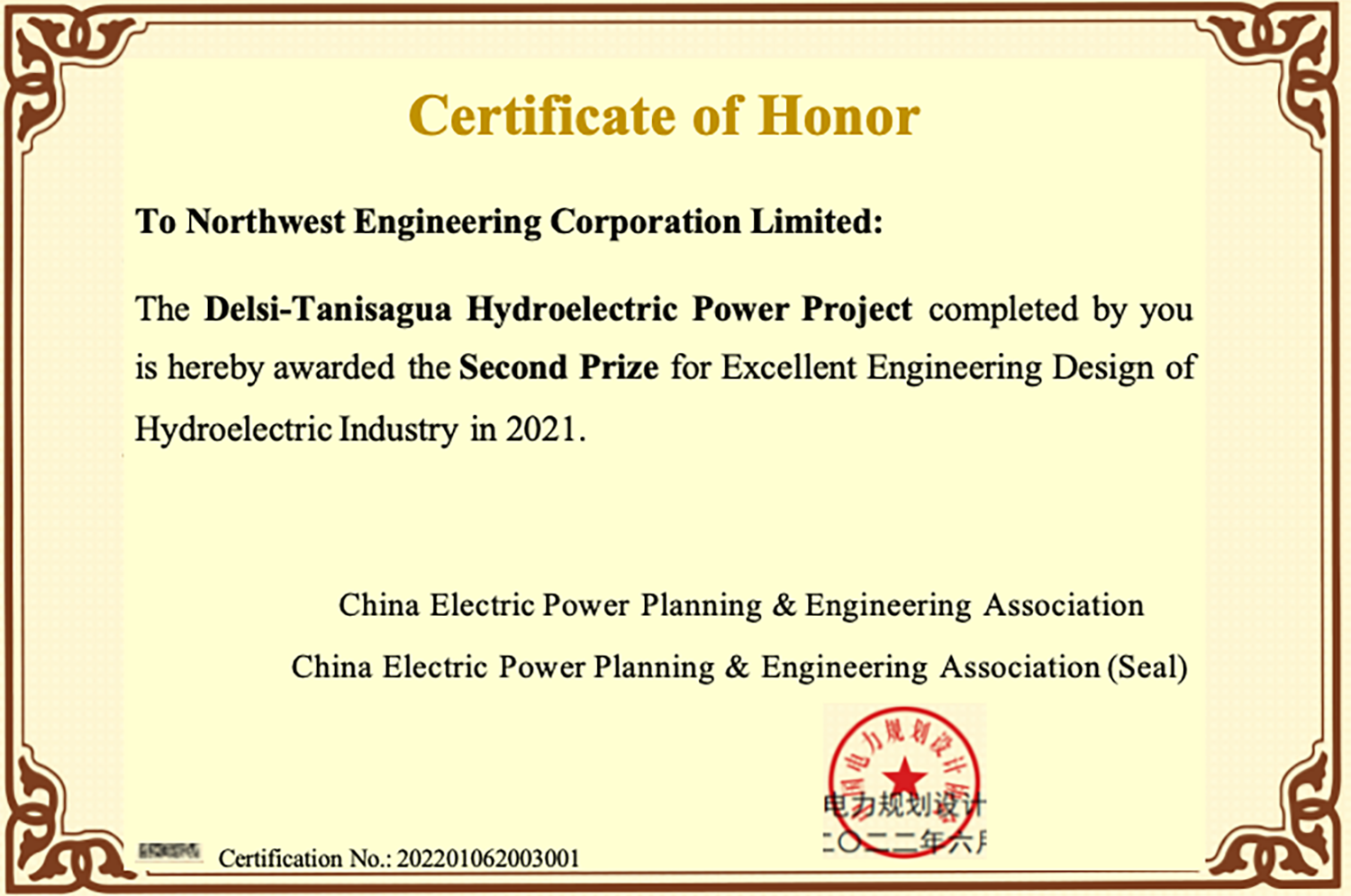
Delsi-Tanisagua Hydroelectric Power Project (hereinafter referred to as the Project) is located on the Zamora River in Zamora Chinchipe Province, Ecuador, in South America. The drainage area controlled by the dam site is 1,112 km2 and the average annual discharge is 47.3 m3/s. The Project is developed primarily for power generation.
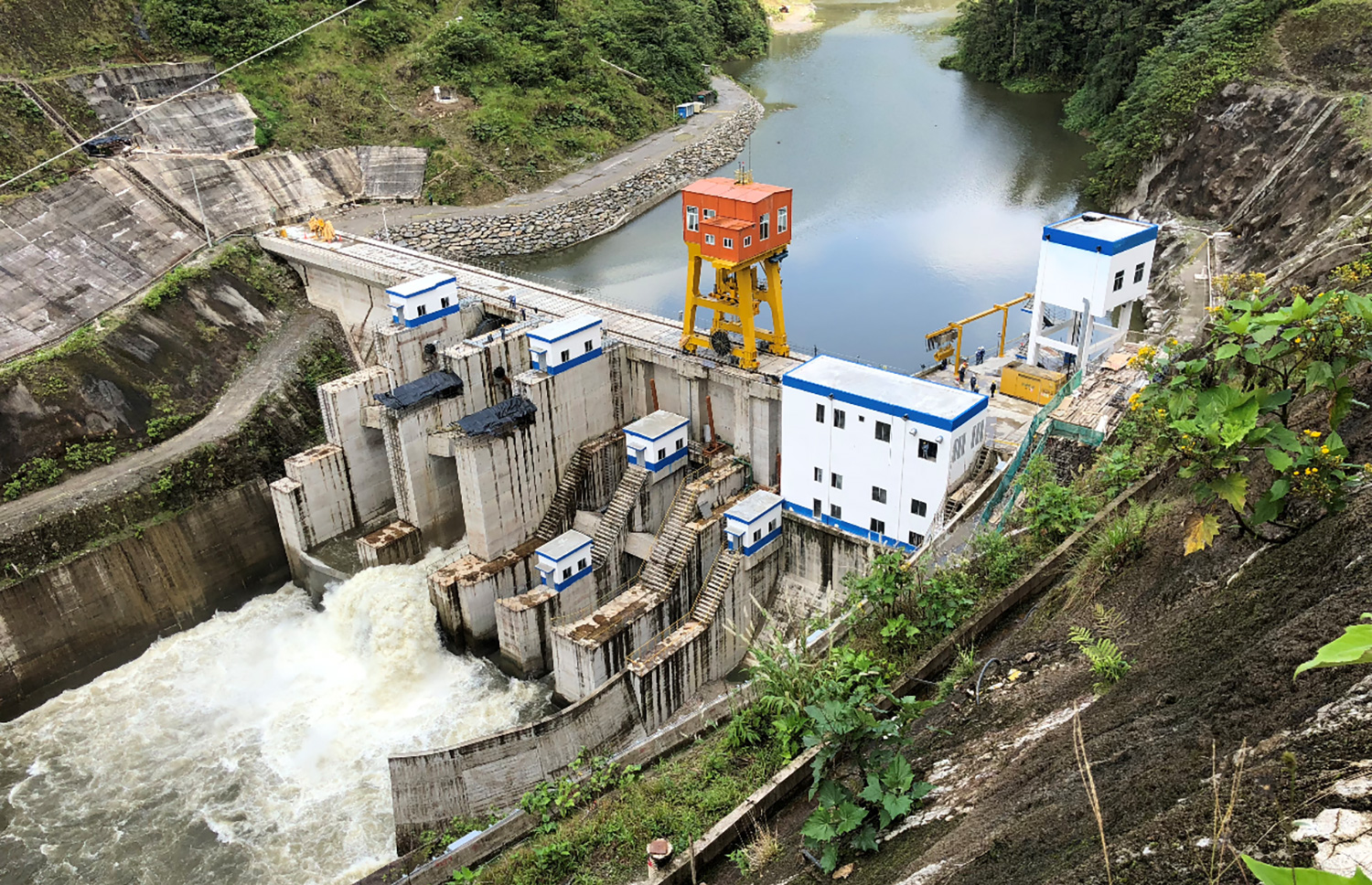
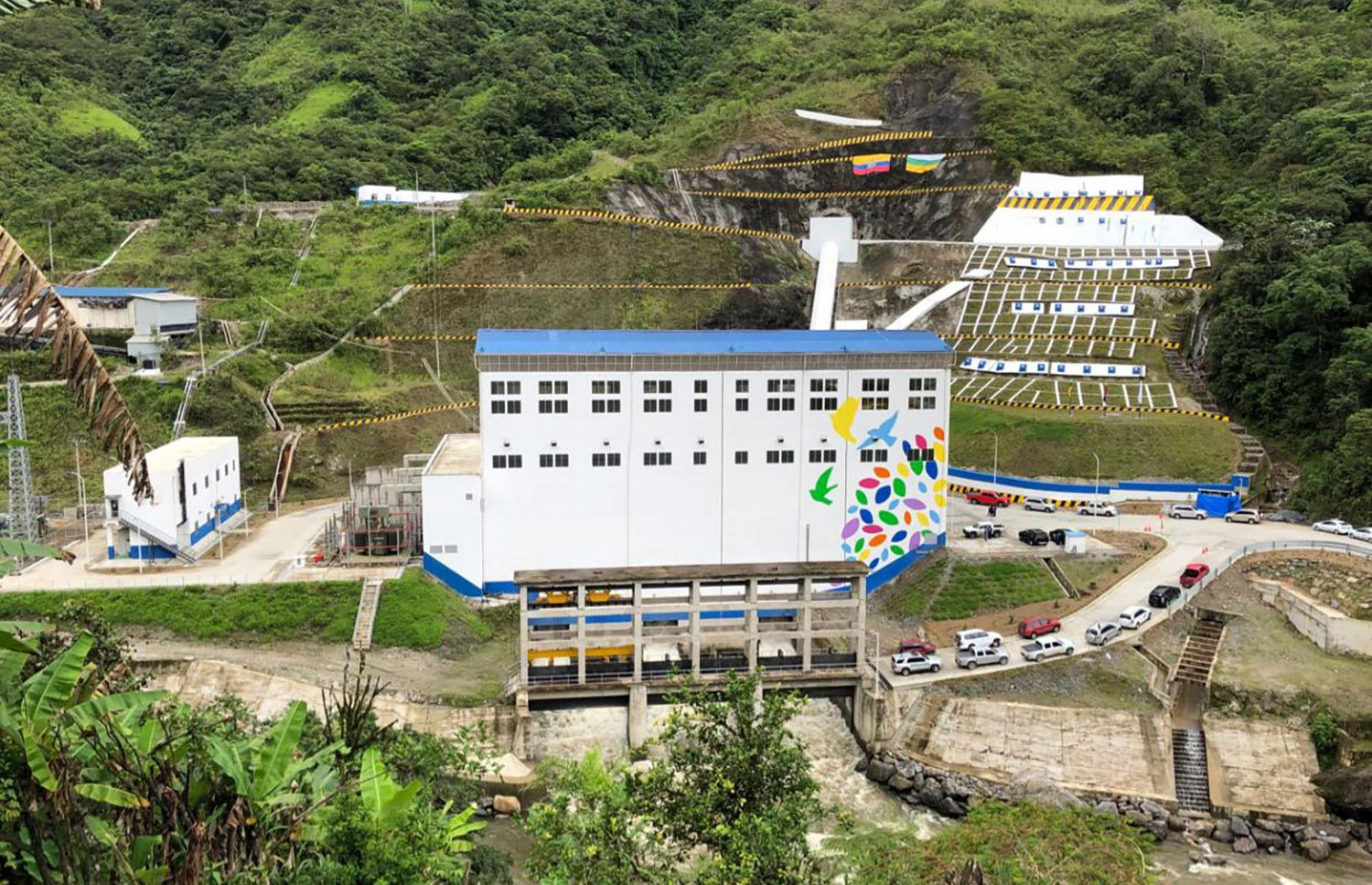
Designed as a diversion-type hydropower station with an installed capacity of 180 MW and an average annual energy output of 1.2181 billion kW·h, the Project is equipped with three 60MW impulse turbine-generator units, the rated available discharge is 42.3 m3/s, the rated water head is 495 m and the maximum gross head is 534.7 m. The reservoir has a maximum operating water level of EL.1491.00 m, a minimum operating water level of EL.1485.00 m and a total storage capacity of 604,000 m3. Main structures of the Project consist of head works, headrace system on the left bank, powerhouse and auxiliary facilities. The power transmission and transformation system is mainly composed of the open-type step-up substation and the 138 kV transmission lines. The total construction period of the Project is 56 months.
The Project, with CELEC EP as the Employer and HYDROCHINA CORPORATION as the Contractor, is developed under an EPC contract mode and HYDROCHINA Northwest Engineering Corporation Limited undertakes the specific implementation of the EPC contract.
The Project is the first large transnational EPC hydropower project led by a design institute of POWERCHINA, and constructed and managed entirely using Chinese technologies and subject to European and US standards.
Designed as a diversion-type hydropower station with an installed capacity of 180 MW and an average annual energy output of 1.2181 billion kW·h, the Project is equipped with three 60MW impulse turbine-generator units, the rated available discharge is 42.3 m3/s, the rated water head is 495 m and the maximum gross head is 534.7 m. The reservoir has a maximum operating water level of EL.1491.00 m, a minimum operating water level of EL.1485.00 m and a total storage capacity of 604,000 m3. Main structures of the Project consist of head works, headrace system on the left bank, powerhouse and auxiliary facilities. The power transmission and transformation system is mainly composed of the open-type step-up substation and the 138 kV transmission lines. The total construction period of the Project is 56 months.
The Project, with CELEC EP as the Employer and HYDROCHINA CORPORATION as the Contractor, is developed under an EPC contract mode and HYDROCHINA Northwest Engineering Corporation Limited undertakes the specific implementation of the EPC contract.
The Project is the first large transnational EPC hydropower project led by a design institute of POWERCHINA, and constructed and managed entirely using Chinese technologies and subject to European and US standards.
Social Evaluation
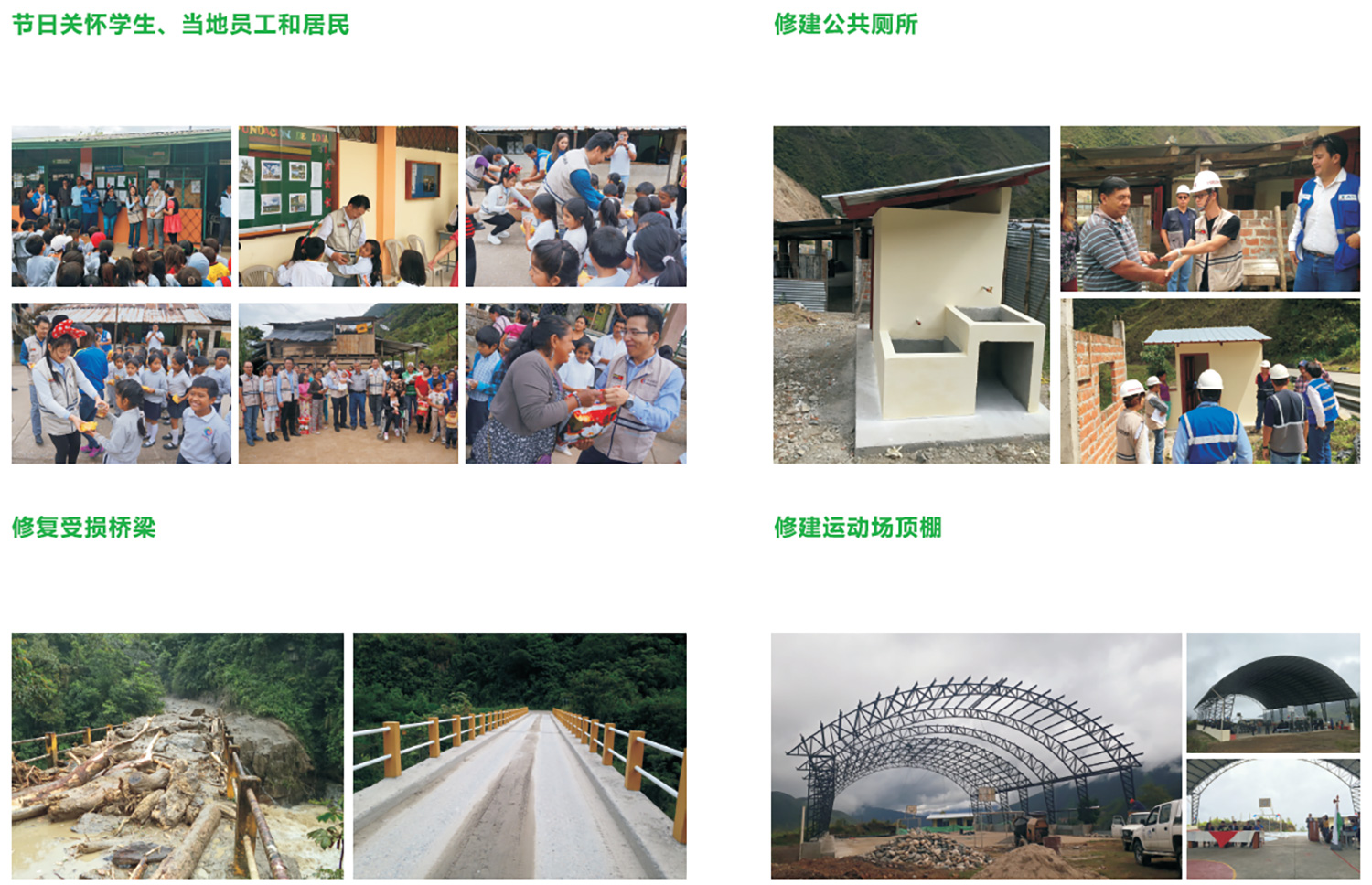
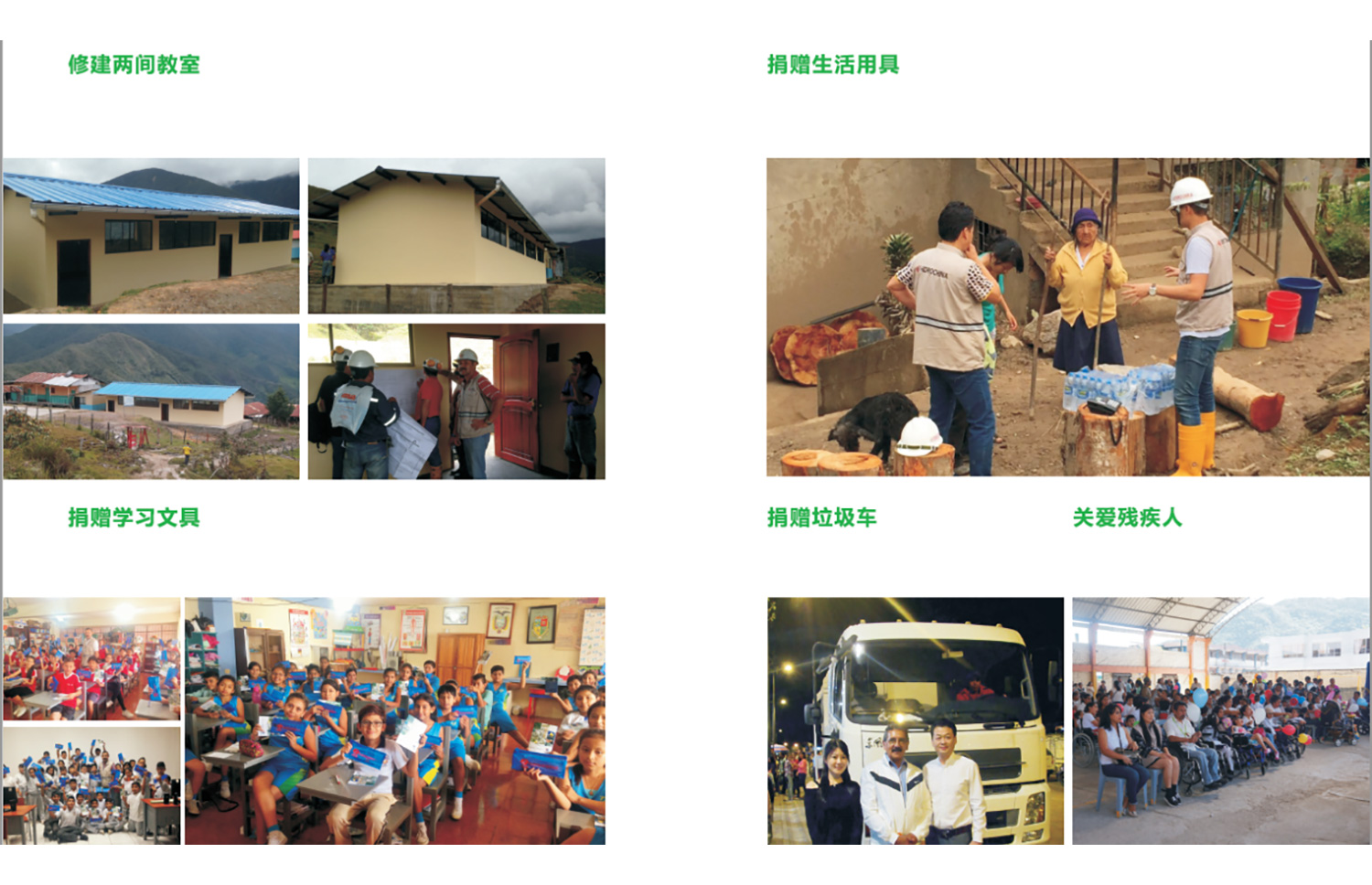
The Project Department of Delsi-Tanisagua Hydroelectric Power Project has always attached great importance to the performance of the enterprise social responsibilities of POWERCHINA, actively participated in social welfare undertakings to help the local government and the people, and endeavored to establish a positive image as a responsible and committed enterprise. Since the construction commences, it has been actively integrated into the local community, made great efforts in localized procurement, recruitment of local labor, respect for local cultural traditions, participation in local activities, improvement of local infrastructure, etc., and been highly recognized and welcomed by the local government and residents. The Project Department took an active part in disaster relief and public welfare activities organized by the community and local government. During the construction and operation of the Project, it donated materials and daily necessities to the local Red Cross, repaired damaged bridge and built classrooms. By fulfilling its social responsibilities, the Project Department substantially improves the living conditions of local residents.
Economic, Social and Environmental Contributions
The technology, equipment and fund for the development of the Project come from China. The successful performance and normal operation of the Project have publicized Chinese hydropower technology and equipment and built a bridge for cultural and technical exchange and cooperation between China and Ecuador. The development of the Project has great economic, social and environmental benefits.
The construction of the Project has brought enormous economic and social benefits to Zamora Chinzipe Province in Ecuador where the Project is located. Focused on sustainable development, the Project fully fulfills POWERCHINA’s social and environmental responsibilities and actively contributes to the local community, making it a classic testimony of the traditional friendship between China and Ecuador. In the course of its implementation, the Project has created numerous job opportunities. The senior officials of provincial and municipal governments have made several visits to the project site and highly appreciated the social added value of the Project. Upon completion of the Project, it will provide continuous driving force for the regional economic development and bring cheap electricity for local residents to greatly alleviate the electricity shortage in Ecuador and promote the green development of local economy.
The three units of the Project were put into operation in September 2018. After one year of operation, emptying and shutdown inspections were conducted, showing that all structures and electromechanical equipment were generally in good operating condition. In July 2021, the Project was completely handed over without defects, all tasks of contract performance were fulfilled satisfactorily, and the risk of contract performance was closed, setting an example for Chinese enterprises to implement hydroelectric power projects in Ecuador.
Up to now, the Hydropower Station has been operating normally for nearly 5 years, greatly alleviating the local power shortage. Hydropower, as a clean energy replacing coal-fired and oil-fired thermal power generation, greatly reduces the CO2, SO2, CO and NO2 emissions, drives down emissions of smoke, dust and other hazardous substances, abates environmental pollution and relieves the pressure on transportation.
The construction of the Project has brought enormous economic and social benefits to Zamora Chinzipe Province in Ecuador where the Project is located. Focused on sustainable development, the Project fully fulfills POWERCHINA’s social and environmental responsibilities and actively contributes to the local community, making it a classic testimony of the traditional friendship between China and Ecuador. In the course of its implementation, the Project has created numerous job opportunities. The senior officials of provincial and municipal governments have made several visits to the project site and highly appreciated the social added value of the Project. Upon completion of the Project, it will provide continuous driving force for the regional economic development and bring cheap electricity for local residents to greatly alleviate the electricity shortage in Ecuador and promote the green development of local economy.
The three units of the Project were put into operation in September 2018. After one year of operation, emptying and shutdown inspections were conducted, showing that all structures and electromechanical equipment were generally in good operating condition. In July 2021, the Project was completely handed over without defects, all tasks of contract performance were fulfilled satisfactorily, and the risk of contract performance was closed, setting an example for Chinese enterprises to implement hydroelectric power projects in Ecuador.
Up to now, the Hydropower Station has been operating normally for nearly 5 years, greatly alleviating the local power shortage. Hydropower, as a clean energy replacing coal-fired and oil-fired thermal power generation, greatly reduces the CO2, SO2, CO and NO2 emissions, drives down emissions of smoke, dust and other hazardous substances, abates environmental pollution and relieves the pressure on transportation.